
 Illustration
Why tile alone is not enough
Grout is porous and tile is only the finish. The waterproofing behind it is what protects the framing. When that layer fails, the first sign is often soft walls, stains or mold, long after the tile went in.
The base slopes to the drain
The floor of the shower is built with a slope so water travels to the drain instead of sitting. Under the tile there is a liner or membrane that catches whatever gets past the tile and grout and carries it to the drain.
The weak points
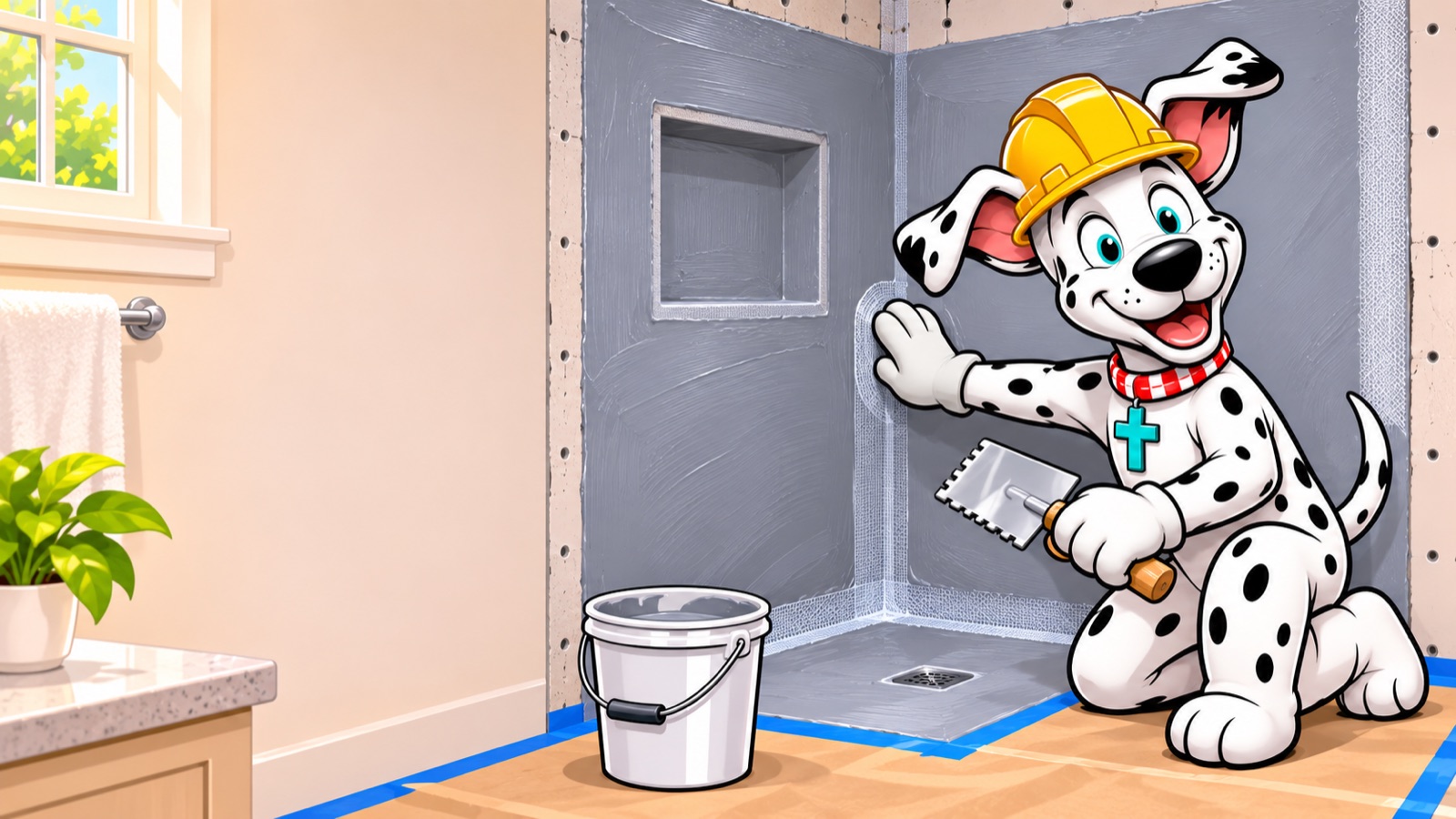
Corners, the curb, the niche and the area around the valve are where leaks start. These are the details worth asking about: how are corners and seams treated, and how is the niche waterproofed?
Ventilation matters too
An exhaust fan that works helps keep moisture from lingering in the room and behind the walls. If the fan is old or missing, consider replacing it during the remodel.

Common questions
Is grout waterproof?
No. Standard grout is porous. The waterproofing is a separate layer behind the tile.
How do I know a shower was waterproofed properly?
You usually cannot see it once the tile is up. That is why it helps to ask how it is done before work starts, and to see the work in progress.
Tell us about your project.
Free in-home estimate. Pero Nenada will look at the job and put the scope in writing.